Releasing music is more than just choosing a date and uploading your song.
For independent artists, timing can make a difference in how much attention a release receives. Your audience’s listening habits, seasonal trends, industry activities, holidays, and your own promotional plans can all affect your release.
So, when is the best time to release music in 2026?
The answer depends on your audience, your music, and your strategy. But some months can offer better opportunities than others.
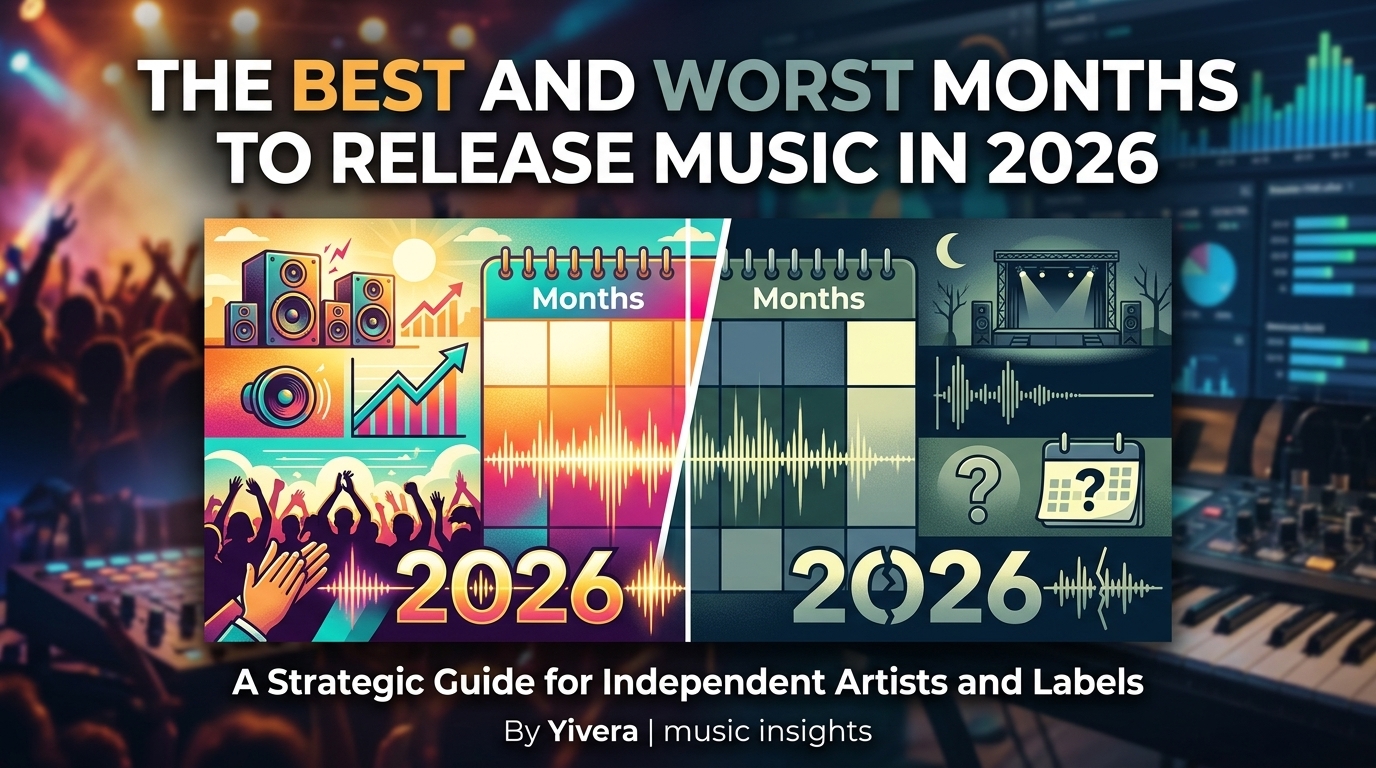
Quick Answer: What Are the Best Months to Release Music?
For many independent artists, January, February, May, June, July, August, September, and October can be strong months for releasing music.
However, there is no universal “perfect” release month. What matters most is choosing a date that gives you enough time to prepare your music, build anticipation, and promote the release properly.
| Month | Release Potential | Best For |
|---|---|---|
| January | Great | Fresh starts, motivational music |
| February | Great | Love, relationships, emotional songs |
| March | Good | Strategic releases and industry activities |
| April | Solid | Spring/summer build-up and new campaigns |
| May | Great | Summer-ready and upbeat releases |
| June | Excellent | High-energy and summer releases |
| July | Excellent | Party, dance and festival-ready music |
| August | Good | Late-summer and nostalgic releases |
| September | Excellent | New projects and emerging artists |
| October | Excellent | Emotional, alternative and seasonal music |
| November | Competitive | End-of-year campaigns and special releases |
| December | Competitive | Holiday, festive and year-end music |
January and February: Start the Year Strong
The beginning of the year can be a great opportunity to introduce new music.
People are settling back into their routines and looking for new experiences, new sounds and new energy.
January works especially well for music with themes around motivation, personal growth, fresh starts and new beginnings.
February naturally creates opportunities for love songs, relationship stories and even anti-Valentine’s Day tracks.
Good themes for January and February:
- Motivation and personal growth
- Fresh-start energy
- Love and relationships
- Breakups and heartbreak
- Positive and uplifting music
March and April: Be Strategic
March and April can still be good months for releasing music, but your strategy becomes more important.
Instead of simply uploading a song, think about what is happening around your audience and how your release can fit into that period.
These months can also be useful for building momentum toward bigger releases later in the year.
Consider releasing:
- Upbeat songs
- New collaborations
- Songs supporting upcoming performances
- New project announcements
- Music that leads into a summer campaign
If you don’t have a strong reason to release during this period, you can also use it to prepare for your next major rollout.
May: Get Ready for Summer
May is a strong time to start introducing music that fits the summer mood.
Listeners are becoming more active, outdoor activities increase, and artists can begin building momentum for summer events and campaigns.
If you have a song that feels energetic, fun, romantic or made for parties, May can be a good release window.
Good themes for May:
- Summer vibes
- Celebration
- Dance
- Party music
- Feel-good songs
- Upbeat collaborations
June and July: Peak Summer Energy
June and July are excellent months for music that thrives on energy and replay value.
This is a period when artists can take advantage of events, performances, social media trends and increased activity around entertainment.
If your song is made for parties, road trips, dance challenges or outdoor events, these months can be particularly useful.
But don’t rely on the season alone.
Your promotional campaign should already be running before the song drops.
Good themes for June and July:
- Party songs
- Dance tracks
- High-energy music
- Summer anthems
- Festival-ready songs
- Social-media-friendly tracks
August: Keep the Momentum Going
August can still be a strong month for releasing music, especially if you have a late-summer campaign.
It can also be a good time to begin teasing a bigger project planned for September or October.
You could use August to release a single that introduces listeners to the sound or story behind your upcoming EP or album.
Good themes for August:
- Late-summer vibes
- Nostalgia
- Carefree music
- Dance and party tracks
- Songs leading into a bigger project
September and October: Build Serious Momentum
September and October can be particularly useful for independent and emerging artists.
By this point, audiences are settling back into regular routines, and artists can use the final quarter of the year to build momentum before the holiday period.
These months are also great for more emotional, reflective, alternative or storytelling-focused music.
Good themes for September and October:
- R&B
- Alternative music
- Emotional songs
- Storytelling
- Reflective music
- New EPs and albums
- Songs with strong visual concepts
October can also provide opportunities for artists whose music or visuals fit Halloween and other seasonal content.
November and December: Proceed With a Strategy
The final two months of the year can be competitive.
There is a lot happening around the holidays, end-of-year events, celebrations and major releases. This can make it harder for a new release to get attention.
That doesn’t mean you shouldn’t release music.
If your song fits the season or you already have an established audience, November and December can work very well.
Good themes for November and December:
- Holiday music
- Celebration
- Gratitude
- Reflection
- End-of-year experiences
- New Year motivation
If your song isn’t connected to the season, consider whether releasing earlier would give you more room to build momentum.
Best Release Months Based on Your Goal
| Your Goal | Months to Consider |
|---|---|
| Start the year strongly | January, February |
| Release a love song | February |
| Build toward summer | April, May |
| Release a summer anthem | May, June, July |
| Promote energetic music | June, July, August |
| Build momentum for a project | August, September |
| Release emotional/alternative music | September, October |
| Release holiday music | November, December |
| Avoid heavy holiday competition | January–October |
Don’t Just Choose a Date. Build a Rollout.
Your release date should be part of a bigger strategy.
Before choosing your date, consider:
- Is the song fully mastered?
- Is your cover artwork ready?
- Is your metadata correct?
- Do you have your promotional content ready?
- Have you planned your social media rollout?
- Will you pitch the song to relevant playlists?
- Do you have a budget for promotion?
- Have you given your distributor enough time to process the release?
Ideally, submit your music to your distributor at least 2–3 weeks before your intended release date. This gives your release time to go through the review and delivery process while giving you enough time to prepare your promotional campaign.
Remember: distribution gets your music onto streaming platforms. Promotion helps people discover and listen to it.
The Best Release Date Is the One You Can Support
There is no magic month that guarantees streams.
A great song released in the “perfect” month can still struggle if there is no promotional strategy behind it.
On the other hand, a well-planned release can perform strongly even during a competitive period.
So before you choose your release date, ask yourself:
“Do I have enough time, content, budget and strategy to support this release?”
If the answer is yes, you’re already in a much better position.
Plan your release early. Submit early. Start promoting early.
Your release deserves more than an upload. Give it a strategy.